
Cybersecurity and Its Importance to Startups and SMEs in Nigeria.

In an era where digital innovation drives economic growth, cybersecurity has become a crucial concern for startups and small and medium enterprises (SMEs) in Nigeria. As businesses increasingly rely on digital platforms to enhance productivity, engage customers, and expand market reach, they are also exposed to cyber threats which could undermine their operations. Given the increasing sophistication of cybercriminals, startups and SMEs must proactively secure their digital assets to prevent financial losses, reputational damage, and legal liabilities.

The Growing Cyber Threat to Startups and SMEs.

Cyberattacks are not exclusive to large corporations; SMEs and startups are often primary targets due to their relatively weaker security frameworks. Common threats include phishing attacks, ransomware, business email compromise (BEC), and data breaches. Unlike multinational corporations with dedicated cybersecurity teams, many startups and SMEs lack the financial and technical resources to combat these threats effectively.

The consequences of cyber threats can be devastating. A data breach could expose sensitive customer information, leading to regulatory penalties and loss of trust. Ransomware attacks could cripple business operations, causing financial distress. Additionally, intellectual property theft could compromise a startup’s competitive advantage when cybercriminals perpetrate cybersquatting activities. These risks highlight the urgent need for robust cybersecurity measures tailored to the needs of Nigerian SMEs and startups.

Extant Cybersecurity Legislations and Their Respective Roles.

1. Cybercrimes (Prohibition, Prevention, Etc.) Amendment Act, 2024

The Cybercrimes (Amended) Act, introduces new measures to strengthen cybersecurity and ensure businesses operate safely in the digital space. Key provisions include:

  • Cybersecurity Levy: A 0.5% levy on electronic transactions to fund national cybersecurity initiatives.
  • Mandatory Reporting of Cyber Threats: Businesses must report cyberattacks within 72 hours to mitigate cyber compromises.
  • NIN Requirement for Electronic Transactions: Customers must provide their National Identification Number (NIN) for verification in electronic financial transactions.
  • Sectoral Computer Emergency Response Teams (CERTs): Industry-specific CERTs will assist businesses in responding to cyber threats effectively.
  • Data Protection Compliance: Businesses must retain and secure customer data in line with the Nigeria Data Protection Act (NDPA).

2. Nigeria Data Protection Act, 2023

The NDPA was enacted to regulate data protection and privacy in Nigeria. It requires businesses to:

  • Obtain customer consent before collecting personal data.
  • Implement security measures to prevent data breaches.
  • Register with the Nigeria Data Protection Commission (NDPC) if they process large volumes of personal data.
  • Comply with stringent data processing requirements to avoid hefty penalties.

3. Digital Rights and Freedom Act, 2019

This Act protects the digital rights of individuals and businesses in Nigeria. It ensures:

  • Freedom of expression and privacy online.
  • Protection against unauthorized surveillance and data breaches.
  • A legal framework for businesses to challenge cyber-related violations.

4. Central Bank of Nigeria (CBN) Cybersecurity Guidelines for Financial Institutions

Since many startups and SMEs rely on digital payments, compliance with CBN’s cybersecurity guidelines is essential. These guidelines mandate:

  • The implementation of multi-factor authentication for online transactions.
  • Regular cybersecurity risk assessments for financial service providers.
  • Fraud monitoring and incident reporting mechanisms.

Implications for Startups and SMEs

While these laws impose compliance obligations, they also present opportunities for startups and SMEs to enhance their cybersecurity strategies. Businesses can leverage these frameworks to:

  • Build Consumer Trust: Compliance with cybersecurity and data protection laws reassures customers that their information are safe.
  • Avoid Legal Liabilities: Adhering to regulations protects businesses from fines and reputational damage.
  • Enhance Cybersecurity Readiness: Engaging with CERTs and implementing best practices reduces cyber risks.

Call to Action for the Federal Government

To further support startups and SMEs, the Federal Government should:

  • Provide Financial Incentives by implementing policies geared towards tax reliefs and grants to help SMEs use funds that would have been remitted for compliance purposes towards implementing cybersecurity measures.
  • Strengthen Public Awareness by providing avenues through training and workshops to educate businesses on compliance.
  • Foster Public-Private Partnerships through collaborations between government agencies and private cybersecurity firms to provide SMEs with affordable security solutions.

Conclusion

Cybersecurity is no longer a luxury but a necessity for Nigerian startups and SMEs. With increasing cyber threats and regulatory requirements, businesses must adopt proactive security measures to safeguard their operations whilst leveraging extant legislations which essentially maintain compliance and protect sensitive information.

However, the government must also play its part by formulating and implementing policies that support cybersecurity resilience among SMEs to create a safer digital landscape for entrepreneurs to thrive. Only through collective effort can startups and SMEs navigate the complexities of cybersecurity and drive sustainable business growth in the digital economy.

Image is AI Generated

Level Up Your Startup: Top Incubators & Accelerators to Join in 2025!

Introduction

The startup journey can be daunting: from building a market fit technology product, growing a formidable team to raising funds required for the execution of your tested idea. However, the startup journey can be more rewarding when founders join tech communities.

 🚀 Joining an incubator or accelerator potentially fast-tracks a startup’s growth, because it connects the founder with networking opportunities, mentorship, and access to resources that propels the startup to the next phase in business and opens such business to strong networks.

💡 From Seedstars in Nigeria to Y Combinator in Silicon Valley, discover the best programs that will take your startup to the next level in 2025 and learn about notable startups that leveraged incubator and accelerator programs for success.

Understanding the Basics

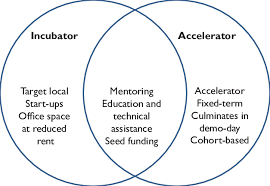
Startup incubators generally take a more flexible, long-term approach towards supporting early-stage ventures. They focus on helping startups develop and mature by providing access to shared office spaces, mentorship, funding advice, and networking opportunities.

For Nigerian startups, joining incubators can be a game-changer. Incubators like Co-Creation Hub (CcHUB) in Lagos provide a collaborative environment where startups can develop innovative solutions that addresses societal challenges. Their Pre-Incubation program supports entrepreneurs in crafting tech solutions, offering mentorship and resources that give life to your business concepts.

Startup accelerators, also known as seed accelerators or startup incubators, are essential in fostering the growth and success of early-stage businesses. These programs follow a fixed-term, cohort-based structure, delivering intensive support and resources to the startups involved. Through a combination of mentorship, education, networking, and seed funding, accelerators help startups achieve rapid growth and scalability. Accelerators are equally crucial for small and medium-sized enterprises (SMEs) aiming to scale. Programs like Seedstars have been instrumental in supporting Nigerian startups. Notable companies such as Chaka and Quickcheck have benefited from Seedstars’ accelerator program, gaining access to funding, mentorship, and a global network.

By participating in these programs, startups not only gain essential support but also increase their chances of long-term success. This year, you can elevate your startup by exploring incubator and accelerator programs today to unlock your venture’s full potential!

Here are some notable programs along with their application timelines:

Global Programs:

  1. Y Combinator: Based in Silicon Valley, Y Combinator offers seed funding, mentorship, and resources to early-stage startups. They run two batches annually, with application deadlines typically in March for the Summer batch and September for the Winter batch. Notable alumni include Airbnb and Dropbox.
  2. Techstars: With a global presence, Techstars provides mentorship-driven accelerator programs, connecting startups with a vast network of mentors and investors. Application deadlines vary by location and program, so it’s advisable to check their official website for specific dates.
  3. Plug and Play Tech Center: Located in California, Plug and Play offers a 12-week program focusing on tech startups, providing mentorship and opportunities to connect with corporate partners. They have multiple programs throughout the year, each with its own application deadline. Details can be found on their official website.

Programs with a Presence in Nigeria:

  1. Seedstars: An accelerator that has been instrumental in supporting Nigerian startups, offering funding, mentorship, and access to a global network. Application periods are announced annually, and interested startups should monitor their official channels for updates.
  2. Founder Institute: A global accelerator with chapters in over 200 cities, including Lagos, offering a structured program to help entrepreneurs launch their startups. They typically run two cohorts per year, with application deadlines in the first and third quarters. Specific dates are available on their website.

Participating in these programs can provide startups with essential support, mentorship, and access to networks crucial for success. By engaging with incubators and accelerators, startups can enhance their growth trajectory and increase their chances of long-term success.

Explore incubator and accelerator programs today to unlock your venture’s full potential!

Key Provisions of the Nigeria Start-Up Act 2022 Every Tech Founder Should Know.

The Nigeria Start-Up Act 2022 (the ‘Act’) is a transformative legislative instrument designed to stimulate innovation, entrepreneurship, and economic growth within Nigeria’s startup community. Enacted as a collaborative effort between the Nigerian government and the tech community, the Act’s foremost objective is to position Nigeria as a key player in Africa’s innovation and technology industry by addressing critical challenges facing startups, streamlining processes, and establishing support mechanisms to ensure that Nigeria remains competitive in the global digital economy. The Act fundamentally creates the right incentives and ecosystem for startups to innovate and grow.

The key provisions outlined below are legal and regulatory requirements every tech founder should be familiar with, emphasizing their implications for new and existing startups.

1. Definition of a Start-Up

The Act provides a detailed definition of what constitutes a startup. According to the Act, a startup must:

a). Be a company incorporated under Nigerian law and in existence for no more than ten years;

b). Engage in the development of digital technology products, or improvement of innovative processes i.e products or services;

c). Be predominantly Nigerian-owned, with at least 51% of its shares held by Nigerians;

d). Possess the capacity to scale and generate revenue.[1]

This definition ensures that only genuinely innovative businesses qualify for the benefits provided under the Act. Tech founders are advised to align their business structures to meet these criteria where possible.

2. Start-Up Label Certification

One of the most crucial aspects of the Act is the introduction of the startup label, which is granted to eligible companies by the National Information Technology Development Agency (the ‘Secretariat’) through a digital portal. The certification process involves submitting an application via the portal, that meets the criteria outlined in the Act, subject to the standard assessment. Once these requirements are fulfilled, the company receives a start-up label, valid for 10 years.

Certified startups gain access to several benefits, including:

  • Tax exemptions;
  • Incentives for investment;
  • Government grants and loans;
  • Capacity-building opportunities.[2]

Startups should ensure that their applications are comprehensive and adhere strictly to the requirements of the Act.

3. Tax Incentives[3]

The Act prioritizes tax incentives for angel investors and venture capitalists to attract investment into the startup ecosystem for the purpose of reducing the financial burden on startups. These include:

a. Tax Holidays

Startups are entitled to tax holiday of up to four years from the date of certification under the Act.

b. Research and Development (R&D) Deductions

Expenses incurred on R&D activities are deductible from taxable income, encouraging startups to innovate and remain competitive.

4. Access to Funding[4]

The Act prioritizes access to funding, by introducing key mechanisms to ensure that startups can access funding efficiently:

a. Start-Up Investment Seed Fund

A Start-Up Investment Seed Fund is established with a minimum annual allocation of N100,000,000 managed by the Nigerian Sovereign Investment Authority (NSIA), to provide grants, loans, and equity investments to certified startups, inclusive of export-focused supports such as the Export Development Fund, Export Expansion Grant, and Export Adjustment Scheme Fund.

b. Credit Guarantee Scheme

Additionally, labelled startups can benefit from affordable credit through a dedicated Credit Guarantee Scheme to reduce risks borne by lenders when financing startups.      

5. Regulatory Flexibility[5]

Startups often face significant regulatory hurdles, which can stifle growth. The Act addresses this by offering regulatory flexibility through sandbox programs, allowing startups to test innovative products and services under relaxed regulatory conditions.

6. Market Access and Regulatory Support

The Act simplifies regulatory processes and enhances market access for startups, that ensures they focus on business growth rather than navigating complex regulations. Central to this initiative is the Startup Portal, a one-stop platform for registration, prioritizing startup applications, and facilitating interactions among investors, regulators, and startups. Launched in 2023, the portal is accessible at https://startup.gov.ng.[6]

The Act also mandates the Secretariat to facilitate regulatory support for startups by collaborating with relevant regulators to ease compliance processes and foster access to local and international markets.[7]

To qualify as a startup under the Act, a business must satisfy all requirements listed in the definition section of this article.

7. Intellectual Property (IP) Protections[8]

Startups often operate in industries where intellectual property is a core asset. The Act places strategic emphasis on intellectual property (IP) rights, as highlighted in Section 31, recognizing their pivotal role in fostering innovation and entrepreneurship. The Act actively promotes the creation, protection, and commercialization of IP assets by startups, while also facilitating their penetration into global markets. This effort is anchored in partnerships with key institutions such as the Nigerian Copyright Commission and the Trademarks, Patent, and Design Registries.

A significant innovation under the Act is the inclusion of a dedicated IP registration channel within the Startup Portal, exclusively accessible to startups that have obtained the required labelling from the Secretariat. This initiative simplifies the process for registering trademarks and patents internationally, enabling Nigerian startups to compete on the global stage more effectively. The Secretariat’s active role in this process ensures that startups can navigate international IP frameworks with greater ease and efficiency.

This enhanced IP registration and protection framework is a critical step in boosting Nigeria’s startup ecosystem, empowering businesses to secure their innovations while expanding their market reach. Such progress aligns with Nigeria’s ongoing economic diversification efforts, as the Information and Communication Technology (ICT) sector contributed 19.78% to the country’s GDP in the second quarter of 2024, reflecting the nation’s shift away from reliance on oil.

8. Innovation Hubs and Incubators[9]

The Act empowers the National Information Technology Development Agency (NITDA) to collaborate with relevant stakeholders to establish hubs and incubators that will promote collaboration, mentorship, and networking. These hubs are designed to serve as centres for knowledge exchange and support, providing startups with the resources needed to develop and scale innovative ideas.

9. Dispute Resolution

The Act provides a streamlined dispute resolution mechanism to handle conflicts involving startups. It promotes the use of alternative dispute resolution mechanisms and establishes a Start-Up Tribunal to handle disputes related to its provisions[10].

Conclusion

The Nigeria Start-Up Act 2022 is a landmark legislation that substantially supports technological innovation. Its provisions on certification, funding, tax incentives, and regulatory flexibility create a conducive environment for startups to thrive.

However, it is worth noting that the year 2023 witnessed a sharp decline in global investment in startups and innovation, signaling a marked reversal from the funding boom of 2020-2022. According to the 2024 Global Innovation Index Tracker, venture capital funding and scientific output regressed to pre-pandemic levels, with the downturn hitting emerging regions like Latin America and Africa particularly hard. Nigeria’s startup ecosystem was not immune to these challenges, as the total funding received by local startups plummeted.[11]

Several factors contributed to this funding drought. The global economic slowdown has made institutional investors more cautious, particularly in high-risk areas like startup investments, where only a fraction of ventures eventually become profitable. In Nigeria, the challenges are compounded by the volatile foreign exchange (forex) market, which significantly reduces the value of returns when capital and profits are repatriated. This has deterred foreign investors, who are critical to the country’s tech ecosystem.[12]

Another significant factor is the rise of emerging technologies, particularly artificial intelligence (AI). Investors have begun to pivot their strategies, channeling funds toward innovators in AI and other emerging verticals, sometimes at the expense of broader startup ecosystems. This shift reflects a global recalibration of priorities as technological advancements reshape the landscape of innovation.[13]

The broader innovation landscape has also suffered setbacks. Corporate research and development (R&D) spending has slowed, mirroring stagnant revenue growth and recalling the post-2009 financial crisis. Although R&D investment levels remain historically high, their growth has plateaued, and international patenting activity has declined.

Looking ahead, while some central banks have started to cut interest rates, conditions for innovation financing remain tight. This environment may continue to weigh negatively on investments in startups and innovation, particularly in emerging economies like ours (Nigeria). The outlook for 2024 and 2025 remains unusually uncertain, raising concerns about how startups in these regions will navigate these financial headwinds.

For tech founders, while understanding and leveraging the Act is essential for building resilient and scalable businesses. Aligning business operations with the Act’s requirements will become more beneficial in promoting innovation in Nigeria’s digital economy, if Nigerian startups and policymakers prioritize fostering local investment sources, diversifying funding strategies, and aligning with global trends in emerging technologies to stay competitive.

Written by Adeola Osifeko Esq LLB, LLM, ACIS

Partner, Corporate-Commercial Practice Group, AEO Law Practice


[1] Nigeria Start-Up Act 2022, s 2

[2] World Intellectual Property Office, ‘Nigeria’s Startup Act’s Impact on Innovation’ 14 March 2024 <https://www.wipo.int/en/web/global-health/w/news/2024/news_0004> Accessed on 2 December 2024

[3] Nigeria Start-Up Act 2022, s 24

[4] Nigeria Start-Up Act 2022, ss 19 and 21

[5] Nigeria Start-Up Act 2022, s 37

[6] Nigeria Start-Up Act 2022, s 13

[7] Nigeria Start-Up Act 2022, s 18

[8]  WIPO (n2)

[9] Nigeria Start-Up Act 2022, s 28(1)(e)

[10] Nigeria Start-Up Act 2022, s 47-48

[11] WIPO, ‘ Global innovation Inde 2024’ September 2024 https://www.wipo.int/web-publications/global-innovation-index-2024/en/  Accessed on 3 December 2024

[12] Ibid

[13] Ibid