
Regulatory Guidelines for Blockchain Technology Start-Ups in Nigeria.

Introduction

Blockchain and distributed ledger technology (DLT) are transforming Nigeria’s digital economy, offering innovative solutions across finance, supply chain, and governance. As adoption grows, so does the need for a robust regulatory framework to ensure compliance, investor protection, and market stability. The Securities and Exchange Commission (SEC) and the Central Bank of Nigeria (CBN) have introduced regulations to guide Virtual Asset Service Providers (VASPs), Digital Investment Service Providers (DISP) and businesses leveraging blockchain. This article outlines Nigeria’s regulatory requirements, focusing on SEC’s 2024 Amended Digital Asset Rules, the Investment and Securities Act 2025 (ISA 2025), and CBN’s compliance rubrics, providing actionable guidance for businesses.

Understanding Nigeria’s Blockchain Regulatory Framework

Nigeria’s regulatory approach balances innovation with oversight. The SEC classifies most digital assets—stablecoins, utility tokens, and asset-referenced tokens—as securities unless proven otherwise, requiring registration for entities issuing, trading, or managing these assets targeting Nigerian investors. The CBN, while historically cautious about cryptocurrencies, has shifted to permit regulated VASPs to operate bank accounts under specific conditions, reflecting a pragmatic embrace of blockchain’s potential.

The National Blockchain Policy, approved in May 2023, underscores Nigeria’s commitment to blockchain adoption, though it lacks legislative force. It serves as a guide for businesses, emphasizing innovation and economic growth. The introduction of the eNaira, a central bank digital currency (CBDC), and Nigerium, a blockchain that is entirely owned and controlled by Nigeria, further highlights Nigeria’s blockchain integration, regulated by the CBN and NITDA respectively.

Key Regulatory Bodies and Their Roles

  1. Securities and Exchange Commission (SEC): Oversees digital assets as securities under the ISA 2025, regulating VASPs, exchanges, and custodians. The SEC’s 2024 Amended Digital Asset Rules provide a comprehensive framework for compliance.
  2. Central Bank of Nigeria (CBN): Regulates financial institutions and VASPs’ banking operations, enforcing anti-money laundering (AML) and know-your-customer (KYC) requirements.
  3. National Information Technology Development Agency (NITDA): Supports blockchain adoption through initiatives like the National Blockchain Adoption Strategy and data protection regulations.

SEC Regulatory Requirements for VASPs

The SEC’s 2024 Amended Digital Asset Rules and ISA 2025 outline specific obligations for VASPs, categorized by their activities:

(a) Licensing Categories:

(i)Digital Asset Offering Platform (DAOP): Facilitates token or coin offerings.

(ii) Digital Asset Exchange (DAX): Operates trading markets, including Over the Counter (OTC) and brokerage models.

(iii) Digital Asset Custodian (DAC): Provides safekeeping and asset management.

(iv) Digital Asset Intermediary (DAI): Offers brokerage, advisory, or trustee services

(v) Operators may hold multiple licenses if they meet each category’s requirements.

(vi) Accelerated Regulatory Incubation Program (ARIP): A 12-month program allowing startups to test models under SEC supervision before full registration, ideal for refining innovative services.

(b). Corporate Governance

(i) Minimum of five directors, including one independent non-executive, a non-executive chairman, an executive with fintech expertise, and 60% Nigerian citizens.

(ii) CEO tenure capped at 10 years.

(iii)Mandatory board committees: Nomination, Governance, Audit, Remuneration, and Risk.

(c) Financial Requirements: DAXs and DACs require a minimum paid-up capital of ₦1 billion, with varying thresholds for other VASPs.

(d) Advertising Compliance:

(i) Advertisements must be SEC-approved, clear, and non-misleading.Prohibited claims include “double your money” or “secure your future.”

(ii) Unverified influencers are banned, and compliance with Advertising Regulatory Council of Nigeria (ARCON) guidelines is mandatory.

(e) Privacy Coins Ban: To combat money laundering and exit the FATF Grey List, Nigeria prohibits privacy coins that obscure transaction details or user identities.

(f) Foreign VASPs: Foreign operators not targeting Nigerians may qualify for a “reverse solicitation” exemption. However, active marketing (e.g., local ads, influencers, or events) triggers registration requirements. VASPs licensed in International Organization of Securities Commissions (IOSCO), West African Securities Regulators Association (WASRA), or reciprocal jurisdictions may apply for conditional exemptions if they meet Nigerian standards.

CBN Regulatory Compliance Requirements

The CBN’s regulatory framework, while not blockchain-specific, imposes critical compliance obligations on businesses using blockchain/DLT, particularly VASPs. Key requirements include:

a.  Guidelines on Operations of Bank Accounts for VASPs (December 2023): VASPs registered with the SEC can open bank accounts with CBN-regulated institutions, provided they obtain SEC license. However, CBN-regulated entities are prohibited from dealing in cryptocurrencies or facilitating payments for unregistered VASPs. Accounts of non-compliant entities must be identified and closed by banking and financial institutions.

b. Anti-Money Laundering/Combating the Financing of Terrorism (AML/CFT) Regulations (2019): VASPs must implement robust AML/CFT policies, including transaction monitoring and suspicious activity reporting, to prevent financial crimes.

c. Three-Tier KYC Requirements (2013): Businesses must verify customer identities through tiered KYC processes, ensuring traceability of blockchain transactions. This addresses anonymity concerns, requiring platforms to link user addresses to real identities.

d. Risk-Based Cybersecurity Framework (2019): VASPs must adopt cybersecurity measures, including governance, risk management, and resilience assessments, to protect digital assets and customer data.

e. Consumer Protection Framework: VASPs must safeguard consumer data and implement measures to prevent unauthorized disclosures, aligning with the Nigerian Cybercrime (Amendment) Act 2024.

These requirements ensure VASPs operate transparently and securely within Nigeria’s financial system, complementing SEC regulations.

Other Relevant Laws and Regulations

a. The NDPA-GAID 2025 provides detailed guidance under the Nigeria Data Protection Act 2023, setting data governance standards for all entities processing Nigerians’ personal data, locally or abroad. Blockchain businesses must carry out Data Privacy Impact Assessments, appoint certified Data Protection Officers, and file annual compliance audits if classified as major data controllers or processors. They must ensure transparency, implement privacy-by-design, uphold user rights, and obtain explicit consent for cookies and tracking on their platforms

b. Companies and Allied Matters Act (CAMA) 2020: Governs corporate registration and operations for all businesses, including fintechs.

c. Federal Competition and Consumer Protection Act (2018): Protects consumers from unfair practices, applicable to digital asset services.

d. Cybercrime (Amendment) Act 2024 mandates stricter compliance for electronic platforms handling user information, and enhancing enforcement against cyber fraud. Importantly for Virtual Asset Service Providers (VASPs), and blockchain-based services within the scope of its cybersecurity and data governance obligations mandates traceability of all transactions, log maintenance and cooperation with investigative authorities. The Act also introduces higher penalties for non-compliance with know-your-customer (KYC) obligations, aligning with Nigeria’s broader anti-money laundering (AML) strategy.

Practical Guidance for Businesses

1.Assess Your Business Model: Determine if your services fall under DAOP, DAX, DAC, or DAI categories and apply for the appropriate SEC licenses. Use ARIP for pilot projects.

2. Secure CBN Compliance: Register with the SEC to access banking services and implement AML/CFT, KYC, and cybersecurity measures to meet CBN standards.

3.Establish Governance: Appoint a compliant board with Nigerian representation and establish required committees to ensure transparency.

4.Mind Marketing Practices: Obtain SEC and ARCON approval for ads, avoiding misleading claims or unverified influencers.

5.Avoid Privacy Coins: Ensure your platform does not support privacy coins to comply with Nigeria’s anti-money laundering efforts.

6. Prepare Financially: Meet the ₦1 billion capital requirement for DAXs/DACs and budget for registration fees and compliance costs.

7.Foreign Operators: If the intention is to target foreigners, maintain a passive presence to avoid SEC registration. If marketing locally, secure a license.

8.Engage Experts: Consult legal expert on fintech matters to navigate SEC and CBN requirements, ensuring compliance with local laws.

Conclusion

Nigeria’s blockchain regulatory framework, led by the SEC’s 2024 Amended Digital Asset Rules, ISA 2025, and CBN’s compliance requirements, provides a clear path for businesses to thrive while ensuring investor protection and market integrity. By securing SEC licenses, adhering to CBN’s AML/CFT and KYC mandates, and aligning with data protection laws, blockchain businesses can build trust and sustainability. Early engagement with regulators through programs like ARIP and robust governance will position entrepreneurs to lead in Nigeria’s dynamic digital economy.

Written by Adeola Osifeko LLB, LLM, ACIS, ABR. Principal Partner at AEO Law Practice. Contact adeola@aeolawpractice.com

The Role of Blockchain in Africa: Understanding the Technology and Its Impact.

What is Blockchain?

Blockchain is a secure, decentralized database that allows all participants in a network to access real-time, tamper-proof information simultaneously. This transparency and reliability are especially valuable in Africa, where trust in centralized systems is often undermined by inefficiencies, bureaucracy, or corruption. In this context, blockchain presents a powerful tool for building confidence in data and transactions.

Its potential becomes even more significant under the African Continental Free Trade Area (AfCFTA),which brings together 54 nations to form the world’s largest free trade zone. As AfCFTA works to boost intra-African trade and integration, blockchain can help overcome key obstacles by streamlining cross-border transactions, lowering costs, and fostering trust among trading partners.

How does blockchain work?

Blockchain is a type of distributed ledger technology (DLT) that records transactions across multiple computers, or nodes, in a network. Unlike traditional databases controlled by a single entity, blockchain distributes the power to update the ledger among participants. This ensures no single party can alter the data without consensus, making it highly secure.

In Africa, consider a smallholder farmer in Kenya using a blockchain-based platform like AgriLedger. When the farmer sells maize to a cooperative, the transaction is recorded in a secure, encrypted “block” and distributed across participants within the network. Each block is encrypted with a unique, unchangeable hash and linked to the previous block, forming a chain. This chain is shared across the network, allowing buyers, cooperatives, and regulators to verify the transaction’s authenticity. Nodes, such as local cooperatives or tech hubs, are rewarded with digital tokens for validating these transactions.

The blockchain’s cryptographic security requires two keys: a public key (like an account number) and a private key (a secure password). For instance, a cocoa farmer using the Agriledger platform would use their public key to receive payments on the blockchain, while the private key would be used to authorize transactions. This ensures that only the rightful owner of the private key can access and control the funds.

What is proof of work and how is it different from proof of stake?

Blockchain networks use consensus mechanisms to validate transactions. In Africa, public blockchains like Bitcoin or Ethereum use either proof-of-work or proof-of-stake to achieve this.

In a proof-of-work system, nodes (or miners) compete to solve complex cryptographic puzzles to validate transactions. First to solve the puzzle earns tokens. For instance, in Nigeria, where crypto adoption is high, early Bitcoin miners used proof-of-work to earn rewards, though the energy-intensive process has raised concerns about unreliable electricity.

In contrast, proof-of-stake selects validators based on the amount and duration of cryptocurrency they hold. In Ethiopia, a blockchain platform for coffee exports could use proof-of-stake, where traders with more staked coffee-backed tokens have a higher chance of validating transactions, earning rewards without heavy energy use. This shift, as seen in Ethereum’s 2022 “Merge,” is more sustainable for Africa’s energy-constrained environments.

How can businesses benefit from blockchain?

Blockchain and DLT offer African businesses opportunities to reduce risks, lower costs, and enhance transparency. Here are key benefits with local examples:

  • Reduced risk and lower compliance costs: In South Africa, banks spend millions annually on “know your customer” (KYC) processes. A blockchain-based KYC system, like that piloted by Standard Bank, could require only one verification per customer, shared across institutions. This cuts costs and improves customer onboarding for rural clients accessing microfinance.
  • Traceable & Sustainable Transactions: African businesses engaged in cross-border trade often encounter significant delays due to paperwork and inefficient processes. However, digital innovations are beginning to change this landscape. A notable example is a Rwandan coffee exporter who decides to leverage the blockchain-based platform Bext360, which utilises blockchain, IoT, and AI, guaranting end-to-end traceability of the exporter’s coffee shipments—from farms in Rwanda to markets in Europe, ensuring transparency, ethical sourcing, and sustainability throughout the supply chain.
  • Automated and secure contract fulfillment: Smart contracts—self-executing agreements coded on a blockchain—can automate processes. A Nigerian solar energy company like Switch Electric integrates smart contracts on a blockchain to manage pay-as-you-go solar systems. When a customer pays via mobile money, the contract automatically activates their solar panel, reducing manual oversight and ensuring reliable energy access.

How are blockchain, cryptocurrency, and decentralized finance connected?

Blockchain underpins cryptocurrencies like Bitcoin and Ethereum, enabling secure, intermediary-free transactions. In Africa, where 60% of the population is unbanked, cryptocurrencies offer an alternative to traditional banking. For example, in Nigeria, platforms like Binance allow traders to buy and sell crypto using local currencies, bypassing slow bank transfers.

Decentralized finance (DeFi) takes this further by replacing financial intermediaries with smart contract-based services. In Kenya, a DeFi platform like Aave could enable peer-to-peer lending, where a boda boda driver borrows funds directly from investors via blockchain, with terms enforced by smart contracts. This empowers users with greater control over their finances, crucial in regions with limited banking infrastructure.

What else can blockchain be used for?

Beyond cryptocurrencies, blockchain has diverse applications in Africa:

  • Immutable audit trails: In Zimbabwe, where land disputes are common, blockchain can create tamper-proof land title records. A project like Bitland uses blockchain to log property transactions, ensuring transparency and reducing fraud.
  • Supply chain tracking: In Côte d’Ivoire, blockchain tracks cocoa from farm to export, ensuring ethical sourcing. Companies like Farmerline use blockchain to verify the origin of produce, building trust with international buyers and ensuring fair pay for farmers.
  • Smart contracts for governance: In Ghana, blockchain-based voting systems are being explored to enhance election transparency. Smart contracts could automatically tally votes, reducing the risk of manipulation.

How might blockchain evolve over time?

Blockchain’s future in Africa hinges on two trends:

  • Blockchain as a Service (BaaS): Cloud-based BaaS platforms, like those offered by Amazon Web Service (AWS) or Microsoft Azure, allow African startups to build blockchain solutions without heavy infrastructure costs. For instance, a Nigerian fintech could use BaaS to create a remittance platform, lowering fees for diaspora transfers.
  • Interoperability: As blockchain networks grow, interoperability will enable data sharing across platforms. For example, a blockchain like MediConnect, used in other African regions, could be adapted to ensure interstate hospitals share only necessary data (e.g., treatment history for emergencies) with patient consent, while anonymizing or restricting non-essential data. Regional agreements, like those under the East African Community, could further standardize cross-border data-sharing protocols.

These trends align with growing demands for transparency in supply chains (e.g., ethical mining in the DRC) and economic pressures pushing for cost-effective solutions. However, regulatory clarity and cybersecurity advancements are critical to unlocking blockchain’s full potential in Africa.

What are some concerns around the future of blockchain?

Blockchain technology is complex and rapidly evolving, yet the expertise required to effectively harness its potential across various applications remains limited in Africa. The successful implementation of blockchain solutions relies heavily on consistent access to electricity, widespread internet connectivity, and a population with adequate technical skills—resources that continue to be scarce in many parts of the continent. Adding to these challenges, blockchain platforms are often built using different programming languages and operate on diverse infrastructures, which creates significant interoperability issues and increases the risk of obsolescence as new technologies emerge.

Beyond these foundational barriers, scalability presents another critical challenge. Many established blockchains, such as Bitcoin, struggle to handle high transaction volumes efficiently—an important consideration in densely populated markets like Nigeria. Furthermore, the energy-intensive proof-of-work consensus mechanism commonly used by these blockchains is often impractical in regions with unreliable power supply. However, alternative consensus models like proof-of-stake offer promising solutions to these energy concerns.

In Nigeria specifically, blockchain adoption is gradually gaining regulatory balance as authorities like the Central Bank of Nigeria and the Securities and Exchange Commission unify policies. Although restrictions on major cryptocurrency platforms such as Binance and Coinbase create uncertainty.

At the same time, cybersecurity risks, illustrated by incidents like the hacking of South Africa’s centralized exchange VALR, reveal vulnerabilities within the ecosystem. Moreover, competing financial technologies—such as mobile money platforms like Kenya’s M-Pesa—continue to dominate the payments landscape due to their relative simplicity and widespread adoption, potentially outpacing blockchain solutions in the near term.

Final Thoughts.

While blockchain isn’t a cure-all, by enabling responsible supply chains—those that are transparent, ethically sourced, and sustainable—blockchain strengthens trust and accountability across borders. This is critical for advancing the African Continental Free Trade Area (AfCFTA), which seeks to unify 54 countries into a single market. Through technologies like smart contracts, digital ledgers, and real-time data sharing, blockchain can reduce trade friction, lower costs, and accelerate the movement of goods and services.

Furthermore, the integration of smart contract governance offers a new level of automation and trust in cross-border transactions. By encoding trade agreements into self-executing digital contracts, parties can minimize disputes, enforce compliance automatically, and ensure fairness in trade practices—especially vital in a diverse and multi-jurisdictional context like Africa. Complementing this is blockchain’s capacity to create immutable audit trails, which provide a tamper-proof historical record of every transaction, shipment, and contract execution. This level of transparency deters fraud, simplifies compliance, and builds long-term institutional trust.

However, the transformative potential of blockchain in Africa hinges on the continent’s ability to adapt, innovate, and implement thoughtful regulation. Effective governance frameworks, digital infrastructure, and cross-border legal harmonization will be essential to ensure inclusive, secure, and scalable adoption. With the right ecosystem in place, blockchain can be a cornerstone technology for a unified, resilient, and future-ready African trade landscape

Source:

  1. Mckinsey & Company, ‘What is blockchain’ Mckinsey Explainers June 2024
  2. Raymond Ofagbor and Deweni Apulu, ‘The Role of Crypocurrency and Blockchain Technology in Fostering Growth & Promoting Trade in Africa’ Aelex Article Series August 2023. <https://www.aelex.com/the-role-of-cryptocurrency-and-blockchain-technology-in-fostering-growth-and-promoting-trade-within-the-afcfta/> Accessed on 3 June 2025.

Written by Adeola Osifeko LLB, LLM, ACIS & ABR. Partner at AEO Law Practice

Navigating Visibility and Rights: A Guide for Music Practitioners in the Digital Age.

Digital revolution has fundamentally reshaped the creative ecosystem, through democratization of access and distribution of musical works; providing                          creators with real-time analytics which in turn helps artists refine their strategy, tailor content, and make informed decisions, transforming creativity into measurable, and strategic process. It has also birthed entire genres and formats that didn’t exist before. For example digital art, NonFungible Tokens (NFTs), interactive storytelling, AI-generated music, and virtual performances in metaverses. Additionally, the fusion of tech and art is pushing boundaries, allowing creators to experiment beyond physical limits, by offering unprecedented opportunities and providing global conduits to connect with global audiences.

This article examines how streaming platforms (Spotify, YouTube, Boomplay, and Apple Music) have democratized access to musical works and provided visibility for artists: indie and established alike. It further addresses the crucial role of the Copyright Act 2022 in safeguarding the rights of these creators in Nigeria.

The Digital Transformation of Music Distribution.

Historically, the music industry operated within a controlled framework, which enabled major record labels wield significant power, dictating distribution channels and limiting access for independent artists. Radio airplay and physical album sales were the primary metrics of success. However, the emergence of streaming platforms has disrupted this traditional model, creating a more egalitarian ecosystem, ushering both independent artists and established superstars to harness opportunities to reach millions—often in real-time—with nothing but a market worthy track and reliable internet connection.

This shift raises several pertinent questions for creative practitioners:

  1. How have streaming platforms specifically altered the dynamics of music distribution and audience engagement?
  1. What tools and data do these platforms provide to help creators maximize their reach and understand their audience?
  2. Crucially, how does the Copyright Act 2022 protect creators’ rights in this digital environment, particularly concerning online use of their work and fair remuneration?

Streaming Platforms: New Avenues for Visibility

Platforms like Spotify, YouTube, Boomplay, and Apple Music have become central to how music is discovered, consumed, and monetized.

  1. Spotify‘s data-driven approach empowers artists with valuable insights which enables creators access analytics on listener demographics, track song performance, and strategically pitch their music to editorial playlists. It also provides the platform for both independent and established artists to refine their strategies and target specific audiences. Spotify’s music catalog features a large volume of work from independent and self-releasing artists. Although exact figures aren’t officially published, industry insights suggest that independent labels and creators now contribute a growing share of new releases on the platform. This trend is especially visible in niche and fast-moving genres like underground hip-hop and viral internet rap, where indie artists are gaining traction without traditional label backing.
  1. YouTube provides a visual platform for artists to connect with fans globally. For instance, Burna Boy, also known as “the African Giant” has risen to global prominence with a string of hit songs and critically acclaimed albums, commanding a massive audience on YouTube, where several of his music videos have garnered hundreds of millions of views. Also  CKay’s “Love Nwantiti” is anpther example of a hit song that gained widespread popularity through YouTube. The platform facilitates various forms of content, including music videos, live performances, and user-generated content, expanding opportunities for visibility and engagement.
  2. Boomplay has become a key player in the African music market. It prioritizes African genres and provides a platform for local artists to reach regional and international audiences. Boomplay’s focus on accessibility, including partnerships to improve access in areas with limited infrastructure, is particularly noteworthy.
  3. Apple Music has garnered recognition for curated playlists and high-quality audio. Editorial playlists offer artists a chance to gain exposure to a discerning audience, potentially leading to increased streams and licensing opportunities.

Copyright Act 2022: Safeguarding Creators’ Rights in the Digital Age

While streaming platforms have revolutionized access and visibility for creative practitioners, they also present challenges around ownership, unauthorized distribution, and fair compensation. The Copyright Act 2022 serves as a cornerstone for addressing these concerns and equipping Nigerian music creators with the tools to assert control over their work in the digital environment.

Digital Rights and Exclusive Control

Under Sections 9 and 12 of the Act, creators of musical works and sound recordings are granted exclusive rights to:

  1. Reproduce and distribute their works digitally.
  1. Broadcast or stream their works to the public.
  2. Make their music available on-demand via platforms like Spotify, Boomplay, or YouTube—allowing public access “from a place and at a time independently chosen by them.”

These provisions ensure that creators have legal authority over how, when, and where their works are used online.

Fair Remuneration for Online Use

Section 15 introduces the right to equitable remuneration whenever a sound recording is used for broadcasting or digital streaming. This applies even if the work is used with authorization, ensuring that both the performer and the copyright owner receive a fair share. Where disputes of pecuniary nature arises, the Nigerian Copyright Commission is empowered to mediate and determine fair compensation.

Additionally, Section 16 ensures that music creators are not sidelined when their work is embedded in audiovisual content (e.g., music videos or films) that is subsequently broadcasted or streamed—they are still entitled to fair compensation.

Online Enforcement and Infringement Control

The Act further establishes robust anti-infringement measures in the digital space (Part VII, Sections 54–62):

  1. Notice-and-Takedown (Sections 54–55): Rights holders can demand that online platforms remove infringing content. Platforms must act quickly to avoid liability.
  1. Repeat Infringers (Section 56): Accounts that repeatedly post infringing content must be suspended.
  2. Infringer Identification (Section 60): Creators can request platform cooperation in revealing the identity of users who post unauthorized content.
  3. Blocking Access (Section 61): Courts can compel service providers to block access to infringing online content.
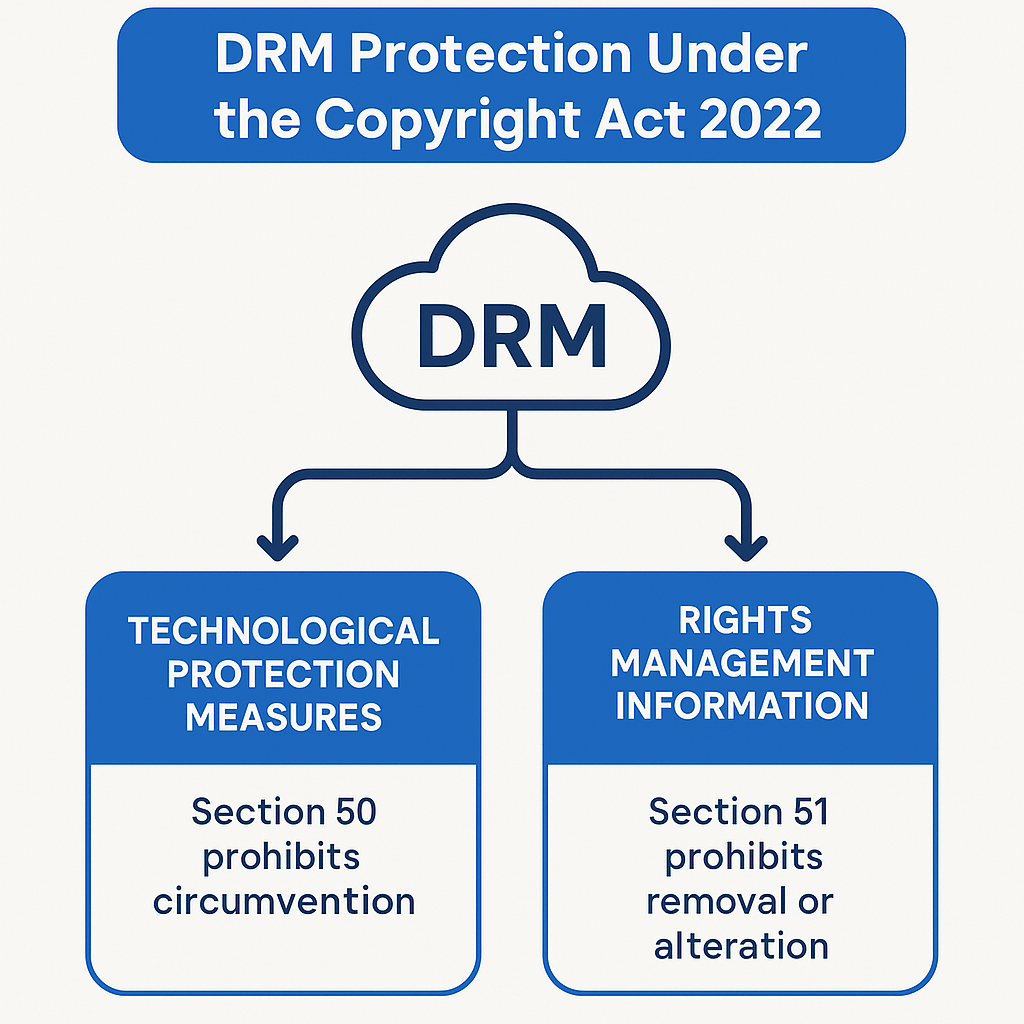
  4. Protection of Digital Rights Management and Rights Management Information: Section 50 prohibits the circumvention of technological protection measures used by rights holders to prevent unauthorized access to or copying of copyrighted works. Section 51 also makes it unlawful to remove, alter, or falsify rights management information, which includes metadata embedded in digital content that identifies the creator, copyright owner, and licensing conditions. While section 52 provides legal remedies for the circumvention of TPMs and the tampering with RMI.

In essence, DRM = Legal and technical tools (like encryption, watermarks, or access controls) used to protect digital content from unauthorized use. Under the Copyright Act 2022, these protections are enforceable in form of civil or criminal penalties in event of infringements.

These provisions give creators the tools to actively monitor, intercept, and respond to unauthorized uses of their music across digital platforms.

The Synergy of Visibility and Legal Protection

The combination of increased visibility through streaming platforms and robust legal protection under the Copyright Act 2022 empowers creative practitioners leverage their online presence to build their brand, attract opportunities, and secure fair compensation for their work, knowing that currency is certain when creativity is backed by code.

Looking Ahead: Embracing Innovation

The digital landscape continues to evolve, with emerging technologies like AI, blockchain, and Augmented Reality/Virtual Reality poised to further transform the creative industries. Creators should remain adaptable and explore these new tools and platforms to enhance their creativity and connect with audiences in innovative ways. Similarly, legislations and regulations should encourage innovation around these technologies providing the necessary legal framework.

Final Note: Empowering Your Creative Journey

The digital era offers immense potential for creative practitioners. Understanding the dynamics of streaming platforms and leveraging the protections afforded by the Copyright Act 2022, allows creators navigate digital environment effectively, maximize their visibility, and secure their rightful place in the global creative economy.

Recommendations for Indie Artists:

  1. Develop your knowledge on the law and regulation by signing up for webinars and/or attend masterclasses that provides you with insight on your rights and responsibility based on the provisions of the Copyright Act 2022.
  1. Utilize Platform Tools: Leverage the data and analytics tools provided by streaming platforms to optimize your content strategy and audience engagement.
  2. Protect Your IP: Take proactive steps to protect your intellectual property, including registering your works at the trademark registry and the Nigerian Copyright Commission. Also employ the service of a lawyer to conduct brand watch and monitor infringement. Consulting legal professional specializing in intellectual property to ensure your rights are protected while navigating complex licensing agreements.
  3. Engage with the Community: Connect with other creators and industry professionals to share knowledge, collaborate, and stay informed about emerging trends

Written by Adeola Osifeko LLB,BL,LLM, ACIS, ABR. Partner, Corporate Commercial Practice.

Understanding Copyrights in Book Publishing in the Digital and AI Era.

Copyright law has long been the cornerstone of protection for literary creators and publishers alike. In Nigeria, the Copyright Act 2022 provides the legal framework for safeguarding the rights of authors, publishers, and rightholders. With the onset of the digital and artificial intelligence (AI) revolution, the traditional book publishing industry now faces profound transformation and accompanying legal complexities. This article seeks to demystify copyright in book publishing by exploring the nature, scope, and enforcement of copyright in Nigeria, while examining emerging global challenges shaped by digital technology and AI.

1. The Legal Nature of Copyright in Book Publishing

Copyright is the exclusive legal right granted to authors/creators over their original works of authorship. In book publishing, this includes rights over literary works such as novels, poetry, textbooks, biographies, and other forms of written expression. Section 2(1) of the Nigerian Copyright Act 2022 recognises literary works as eligible subject matter of copyright, provided they are original and fixed in a tangible medium of expression.

Once a literary work is created and fixed, the author automatically acquires exclusive rights under section 9 of the Act, which includes the right to reproduce, publish, adapt, perform, and communicate the work to the public (through wire or wireless means). These rights are essential to enabling authors and publishers control the commercial use of the literary work/content.

Copyright also provides for moral rights, consisting of the right of paternity i.e right to claim authorship over the work and the right of integrity, entailing the right to object to any distortion, mutilation or other modification of, or other derogatory action which will negatively affect the reputation of the author in relation to the said work.

2. Ownership, Authorship, and Publisher Rights.

Under section 48 of the Copyright Act 2022, the author of a literary work is the first owner of copyright, which implies that the author retains the initial ownership of copyright in their works, unless a specific agreement states otherwise especially in an instance where the work is created under a contract of employment.

In the publishing context, this distinction is significant. Publishers often secure rights through a license or assignment agreement with the author, which allows the publisher produce and distribute the book while retaining specific commercial benefits. This is crucial in publishing: unless the publishing contract assigns or licenses rights to a publisher, the author remains the copyright owner.

Where a book is written under employment or at the direction of a government agency, the copyright may vest in the employer instead of the author. Similarly, for collective works like anthologies or collaborative publications, the initiator may hold the collective copyright, but each contributor retains the rights to their specific portion and can use it independently.

For any copyright assignment — such as transferring publishing rights to a publisher — the law requires this to be done in writing. On the other hand, non-exclusive licences can be granted orally or implied from the author’s actions.

Importantly, authors should know that ownership of manuscript does not automatically vest copyright ownership in the author except where the manuscript is self published. Likewise, if someone inherits a manuscript through a will, they are not presumed to inherit the copyright as well — unless there is a copyright agreement providing that copyright vests in the author.

3. Case Law on Copyright and Publishing.

One notable Nigerian case that highlights the importance of written agreements in copyright ownership is the Court of Appeal’s decision of  Adenuga v. Ilesanmi Press Ltd [1991], where the court addressed the legal issue of whether the appellant, author of the manuscript in issue had consented to the publication of his book by the respondent publisher and printer, based on the respondent’s assertion that the appellant’s conduct—submitting the manuscript, visiting the publisher’s premises, and signing proof pages—amounted to consent. The Court of Appeal however held these acts were insufficient to imply consent to publication, as they could equally support a mere request for printing. Additionally, the respondent’s policy distinguished between printing and publishing, with publication requiring a written agreement, which was absent in this case.

The Court of Appeal found the letter demanding royalty, which the trial judge admitted in evidence, led to a wrong decision at the court of first instance. The respondent’s claim of authority to publish the book was based on an alleged exclusive license. However, under the Copyright Act 1970, such a license must be in writing. No such document was produced, and the respondent’s reliance on implied conduct was rejected. The Court of Appeal ruled that the trial court erred in finding a non-exclusive license where the defence had only pleaded an exclusive one. It set aside the lower court’s decision, found the respondent wanting for copyright infringement, and directed that the cost ordered by the trial court to be paid to the respondent publisher be refunded.

4. Licensing and Royalties in Book Publishing.

Copyright ownership does not necessarily require the author to personally publish or commercialise their book. Through licensing, an author can grant permission to a publisher to exploit some or all rights in the work for a fee or royalty. Section 30 allows copyright owners grant exclusive or non-exclusive licenses to third parties, with specific rules, including that exclusive licenses must be in writing, while non-exclusive licenses can be oral or inferred. For example a non-exclusive license can be inferred where the author grants a book seller the permission to review the literary work at a monthly bookclub organised by the book seller.

On the other hand royalty provisions are central to the financial viability of publishing agreements. However, ambiguity in royalty arrangements often leads to disputes. Contracts should clearly specify the scope of rights granted, the duration of use, territories covered, royalty rates, and audit rights. With the rise of digital publishing, new forms of licensing such as e-book and audiobook distribution have emerged, necessitating updated contractual frameworks.

In the Nigerian publishing landscape, especially in contexts involving educational access or out-of-print books, compulsory licensing remains a pivotal regulatory mechanism. Section 32 of the Copyright Act 2022 introduces a significant provision for access to education and research. It authorizes the Nigerian Copyright Commission (NCC) to grant compulsory licences for the reproduction, translation, or distribution of a work without the consent of the rights holder in certain public interest scenarios.

For example, where a literary work such as a textbook is not available in sufficient quantities or at an affordable price, especially for educational institutions, the NCC may issue a licence to reproduce or distribute such work under specific conditions. This provision ensures a balance between the exclusive rights of copyright holders and the societal need for access to knowledge.

A critical application of this framework is seen in the digitisation of academic materials for platforms serving visually impaired persons or public libraries, where the original publisher may not have issued accessible formats. While the author or publisher still receives royalties under such a licence, their control over reproduction and distribution is effectively limited in favour of public access.

This compulsory license framework becomes even more significant in the age of AI and digital publishing, where data-hungry models may rely on vast textual corpora for training. Although the Act does not directly address AI training datasets, publishers should be aware that a regulatory evolution could one day allow similar licenses for digital uses that are deemed essential to public interest—such as AI-generated educational content or accessibility tools.

This provision aligns Nigeria’s copyright law with global efforts promoting access to knowledge, especially in education and research. Section 32 thus represents an important exception to the rights conferred under copyright, offering an administrative check to ensure that the monopolies granted by law do not hinder educational development, cultural participation, or technological innovation.

5. The Digital Transformation of Book Publishing.

The digitalisation of content has dramatically altered how books are published and consumed. Platforms like Amazon Kindle, VitalSource Bookshelf, and Selar in Nigeria have enabled self-publishing, expanded readership, and lowered entry barriers for authors.  However, while technology empowers authors and publishers to reach global audiences, it also introduces serious challenges—chief among them is online piracy and unauthorized sharing of content.

To address this, the Nigerian Copyright Act 2022 provides robust statutory safeguards tailored for the digital age. Sections 54 to 56 of the Act establish a clear notice-and-takedown regime for service providers: EdTech, blogs, websites, digital and ePublishers, enabling copyright holders to act swiftly when their works are uploaded or shared online without authorisation.

5.1  Takedown Requests: What Authors and Publishers Can Do.

Under section 54(1), the owner of a copyright—such as a publisher ( in the case where the work has been assigned to the publisher) or author—may issue a formal notice of infringement to the digital platform or service provider where the content is being uploaded, such as a file-hosting service, e-library, or social media network. The purpose is to request the takedown or disabling of access to infringing material.

To be valid, the notice must be in writing (physical or digital) and include detailed information identifying the copyrighted work, the infringing content, and a sworn declaration affirming the belief that the use is unauthorised. This puts authors and rightholders in a proactive position to protect their digital assets.

5.2 Obligations of Service Providers.

Upon receiving such a notice, the service provider who in this case is a website, online or digital platform, must act promptly: notify the subscriber who posted the content, take down the infringing material, and inform the copyright owner once it has been removed.

In a balanced approach, the Act allows the accused subscriber to respond with a counter-notice if they believe the takedown was mistaken or misdirected. If the copyright owner does not respond within seven days, the service provider may reinstate the content.

Additionally, the Act imposes a duty on service providers to prevent re-uploading of infringing content through technical safeguards and to remove it again without further notice if it resurfaces.

5.3 Repeat Infringers and Account Suspension.

In cases of repeated infringement, section 56 of the Act introduces a three-strike rule. The digital or online platform must issue a warning after the first notice and suspend the subscriber’s account for at least one month after a second notification—unless the subscriber challenges the notice and refers the matter to the Nigerian Copyright Commission.

This procedure creates a structured digital enforcement mechanism while preserving the rights of both copyright owners and platform owners.

5.4 Legal Protection for Service Providers Acting in Good Faith.

To encourage compliance and cooperation, the Act shields digital, ed tech platforms from liability when they act in good faith to take down or disable access to infringing content. However, failure to act as required may result in the provider being held jointly liable with the infringing party for copyright violation.

5.5 Why This Matters in the Publishing Industry.

For authors, digital publishers, and edtech platforms, these provisions offer critical tools to safeguard their work. As more Nigerian authors distribute books via websites, learning platforms, and global marketplaces like Amazon Kindle or Genti Media, understanding the legal framework for content protection is essential.

This regime ensures that creators can protect their revenue streams, enforce their rights, and hold platforms accountable — a necessary foundation for sustainable growth in Nigeria’s evolving publishing ecosystem.

6. Artificial Intelligence and Copyright Challenges.

The rise of generative Artificial Intelligence (AI) has brought significant disruptions to traditional copyright paradigms. AI tools like ChatGPT, DALL·E, and Midjourney now create content that closely mimics human creativity—ranging from prose and poetry to musical sheets and more. However, their output poses a fundamental question: who owns copyright in a work largely or wholly produced by a non-human entity?

Under the Nigerian Copyright Act 2022, authorship is implicitly human-centric, and it does not recognize non-human creators. Consequently, AI-generated works—particularly those created without meaningful human intervention— has not been captured to qualify for copyright protection in Nigeria. This lack of legal clarity places an obligation on authors to disclose whether or not their work was either assisted by AI or generated by AI in order for publishers to determine the duration of the work whilst providing feedback for developers to ascertain the extent to which the AI models created, renders the desired outcome of the invention.

Globally, jurisdictions have begun confronting similar challenges. In the UK, Section 9(3) of the Copyright, Designs and Patents Act 1988 provides that for computer-generated works, the author is “the person by whom the arrangements necessary for the creation of the work are undertaken.” Recent scholarship, of Nikhil Mishra, and Digvijay Singh in the article, ‘AI-Generated Work and its Implications on Copyright Law in India’, emphasizes that while this human-centric approach is logical, it must evolve to ensure that only users who provide sufficiently original input—like complex prompts or editorial refinement—can claim authorship.

Meanwhile, in the United States, courts and the U.S. Copyright Office have repeatedly affirmed that only works with a human author are eligible for protection. This was reaffirmed in the Thaler v. Perlmutter decision, which denied copyright to a work solely created by an AI system. Similarly, in India, while Section 2(d)(vi) Copyright Act provides for authorship in computer-generated works, legal scholars argue that a mere user prompt is likely insufficient to satisfy the “minimum level of creativity” test for originality.

These developments illustrate a global hesitancy to accept AI as an autonomous creative agent. While some frameworks—like the UK’s—tentatively acknowledge AI-generated works, they still tether authorship to a human agent who exercises creative control.

In Nigeria, the current legal position reflects this cautious global trend. As such, authors and publishers using AI in their creative workflows must ensure that human contributions remain central and verifiable. This includes clearly defined roles in publishing contracts and documented human input in the creation process. This will however, require that the Nigerian Copyright Act 2022, clarifies the duration of works derived from human intervention on works generated from AI notwithstanding that the Act maintains a humancentric approach.

The road ahead likely involves legislative reform and possibly the additional recognition of new rights structures—such as neighboring or sui generis rights—for AI-assisted/generated works. For now, however, the principle remains clear: only humans can author copyright-protected works under Nigerian law, and AI must remain a tool, not a co-author.

7. International Frameworks and the Nigerian Context.

Nigeria is a signatory to several international treaties administered by the World Intellectual Property Organization (WIPO), including the Berne Convention for the Protection of Literary and Artistic Works and the WIPO Copyright Treaty. These instruments obligate Nigeria to provide minimum standards of protection and facilitate international cooperation.

The UNESCO publication “The ABCs of Copyright” and WIPO Publication on digital publishing both stress the need for rights management, metadata standards, and technology tools such as Digital Rights Management (DRM) to combat piracy and enhance copyright governance in publishing.

8. Recommendations for Authors and Publishers.

In an increasingly digital and AI-driven publishing environment, authors and publishers must be proactive in protecting their rights. This includes registering their works with the Nigerian Copyright Commission, drafting detailed publishing license and/or assignment agreements with clarity on royalties, and using technological tools for content protection. Legal literacy and ongoing education, such as through copyright masterclasses and creative industry workshops, are equally critical.

Conclusion.

Copyright remains a vital asset in the book publishing industry, ensuring that creators and publishers can derive value from their intellectual efforts. While the Nigerian Copyright Act 2022 offers a comprehensive framework for protection, the evolution of digital technologies and AI presents new challenges that demand innovative responses. By embracing best practices in copyright management and engaging with legal developments, authors and publishers in Nigeria can thrive in the modern publishing landscape.

References

1. Adenuga v. Ilesanmi Press Ltd [1991] 5 NWLR (Pt. 189) 82

    2. UK Copyright, Designs and Patents Act 1988

    3. Copyright Act 2022 (Nigeria)

    4. Nikhil Mishra, and Digvijay Singh, ‘AI-Generated Work and its Implications on Copyright Law in India’, Journal of Intellectual Property Rights Vol 30 January 2025

    5. United States District Court for the District of Columbia [2023]: Thaler v. Perlmutter, No. 22-CV-384-1564-BAH

    6. WIPO, ‘Publishing Industry in the Digital Environment’ (WIPO Publication No 868, 2021)

    7. UNESCO, ‘The ABCs of Copyright’ (UNESCO Publication, 2010) <https://unesdoc.unesco.org/ark:/48223/pf0000187677> Accessed 6 April 2025

    8. Berne Convention for the Protection of Literary and Artistic Works (1886, as amended 1979)

    9. WIPO Copyright Treaty (adopted 20 December 1996, entered into force 6 March 2002)

    Author: Adeola Osifeko LLB LLM ACIS ABR, is a Partner at AEO Law Practice

    Revised on 29 May 2025.

    Developing an Efficient IP Portfolio Strategy for Startups and SMEs: Beyond Legal Compliance.

    Introduction

    Intellectual Property (IP) is a significant asset for startups and small to medium-sized enterprises (SMEs), not only for legal protection but also as a tool for commercial growth and competitive advantage. This is why SMEs should focus on an effective IP portfolio strategy, structured towards managing and leveraging intellectual property (IP) assets for commercial and strategic advantage. It goes beyond mere registration to actively protect, monetize, and integrate IP into business growth plans.

    While many businesses focus on fulfilling registration requirements, an effective IP portfolio strategy should align with broader business goals, including market expansion, fundraising, and brand positioning. This article explores how startups and SMEs can leverage their IP assets beyond mere legal compliance to drive commercial success.

    Understanding the Business Value of IP

    A well-developed IP portfolio strengthens a company’s market position, attracts investors, and increases valuation. Patents, trademarks, copyrights, and trade secrets provide legal protection while also making commercial avenues available to the business in form of licensing, franchise, merchandising and assignment of IP i.e transferring ownership of IP assets to another entity for a lump sum or structured payments. For example, trademarks enhance brand recognition, and strengthens market positioning, patents secure technological innovations, and trade secrets protect proprietary business processes. Businesses that effectively manage their IP tend to experience greater investment interest and financial growth. Startups and SMEs that strategically develop their IP portfolios can establish a competitive edge within their industries and create long-term business sustainability.

    Aligning IP Strategy with Business Objectives.

    An IP strategy should be integrated into a company’s business development plan. Startups and SMEs need to identify the core aspects of their business that require IP protection and select the appropriate rights accordingly. For instance, a technology startup specializing in artificial intelligence may prioritize patent protection and software copyright, whereas a fashion brand may focus more on trademark and industrial design registration. Investors often view a strong IP portfolio as an indicator of business stability and innovation potential. By ensuring that IP management aligns with broader commercial objectives, startups can enhance their financial and operational prospects.

    Prioritizing Key IP Assets

    Given the financial limitations of many startups, prioritizing the most valuable IP assets is essential. Conducting an IP audit allows businesses to assess which assets provide a competitive advantage. Companies should categorize their IP as: core IP, which is directly linked to primary products or services; supporting IP, which contributes to brand visibility and credibility; and monetizable IP, which can generate revenue through licensing, franchise and distribution agreements. The Nigerian Startup Act 2022[i] emphasizes the importance of IP identification and protection, offering regulatory support to help startups register and commercialize their intellectual assets. The Act also includes incentives such as tax relief and funding to encourage startups to actively safeguard their IP.

    Leveraging IP for Competitive Advantage.

    Some of West Africa’s leading companies have demonstrated how intellectual property can be leveraged to create lasting competitive advantages. One notable example is Dangote Group, which has secured trademarks across multiple markets, reinforcing brand trust and preventing unauthorized use of its name in sectors such as cement, salt, and consumer goods. This strategic use of IP protection has allowed Dangote to dominate industries while maintaining a strong corporate identity.

    In the technology sector, Flutterwave, a Nigerian fintech unicorn, has actively protected its proprietary payment technology through patents and trademarks, ensuring its brand remains distinctive in the growing African digital payments ecosystem. By securing its innovations and licensing its solutions to partners, Flutterwave has scaled its operations across multiple African countries while preventing competitors from exploiting its technology.

    Another example is MTN Group, one of Africa’s largest telecommunications firms, which has strategically used trademarks and copyrights to protect its digital services and content. By securing exclusive rights over its mobile financial service platform, MTN MoMo, the company has established a trusted digital payments brand, preventing market dilution and unauthorized replication of its service offerings.

    These examples illustrate how effective IP management goes beyond legal registration. By licensing proprietary technologies, forging strategic partnerships, and protecting brand identity, companies can reinforce their market presence and increase profitability. For startups and SMEs, following the lead of established firms in leveraging IP can significantly enhance business sustainability and long-term success.

    Cost-Effective IP Management Strategies.

    Since many startups operate within budget constraints, managing IP efficiently is crucial. Businesses can reduce costs by using provisional patent applications, which secure an early filing date before committing to the full cost of a patent. Regional trademark and patent registrations may be prioritized based on market relevance, rather than pursuing global coverage. Several renowned technology startups have successfully adopted hybrid models to balance proprietary rights with open-source accessibility.

    For example, Dropbox has taken a hybrid approach with projects like Lepton, a streaming image compression format. They maintained proprietary rights over the compression technique, which provided significant business value, while open-sourcing the project to engage the community and encourage broader adoption. This strategy allowed Dropbox to benefit from community-supported development and code review while protecting aspects of the software that are unique to their business or provide a competitive advantage.[ii]

    Another example is the Advanced Technology Research Council (ATRC) in Abu Dhabi, which developed and released a series of large language models named Falcon for free. This open-source approach bolstered the UAE’s credibility in the AI field and allowed global developers to download, modify, and integrate these models, fostering widespread adoption and collaboration. [iii]

    These cost-conscious approaches allow startups to safeguard core innovations while fostering industry collaboration, market penetration, and increased adoption. By striking a balance between proprietary protection and selective openness, businesses can optimize their IP assets while allocating resources strategically.

    Enforcing and Protecting IP Assets

    Securing IP rights is only part of the equation; enforcement is equally important. Startups should actively monitor for potential infringements by using an IP lawyer to carry out watch services and deploy digital tracking tools. Additionally, establishing clear IP ownership agreements with employees and contractors helps prevent disputes and unauthorized disclosures. In the event of infringement, businesses can explore alternative dispute resolution mechanisms to address conflicts in a cost-effective manner. The Nigerian Copyright Act 2022 provides legal frameworks for startups to enforce copyright protection, offering provisions for seeking damages and injunctions against unauthorized use.[iv] By utilizing these mechanisms, startups can protect their creative assets and deter exploitation.

    IP as a Fundraising and Investment Tool

    For startups seeking investment, a strong IP portfolio can significantly enhance credibility and valuation. Some investors may frequently assess the extent to which a business has protected its intellectual assets before committing financial resources. Highlighting registered patents and trademarks in investment pitches can strengthen a startup’s appeal, in addition to demonstrating how IP protection mitigates competitive risks. Some businesses also explore IP-backed financing, using their intangible assets as collateral for securing funding. Effectively leveraging IP in fundraising efforts increases a company’s chances of securing long-term financial support.

    Conclusion

    An efficient IP portfolio strategy is more than a legal necessity; it is a fundamental driver of business growth. Startups and SMEs must integrate IP management into their overall strategy, identifying and prioritizing key assets while leveraging their IP for competitive advantage. Protecting and enforcing IP rights ensures that businesses retain control over their innovations while enhancing their appeal to investors and commercial partners. By taking a proactive approach, startups can transform their intellectual assets into powerful economic tools that sustain long-term success.

    Endnotes


    [i] 2022 Nigeria Startup Act, s 31.

    [ii]  Gideon Myle, ‘Balancing Open Source and Proprietary IP’:Dropbox Tech Blog, December 2017 <https://dropbox.tech/infrastructure/balancing-open-source-and-proprietary-ip-they-can-co-exist?>  accessed 9 March 2025

    [iii] Harry Booth, ‘Time100 AI 2024’: Time Magazine, September 2024 < https://time.com/7012755/faisal-al-bannai/> Accessed 9 March 2025

    [iv] 2022 Copyright Act, s 52.